2026 Blueprint for eVTOL Airspace Coordination and Deployment
Author : Alyssa Miller | Published On : 14 Oct 2026
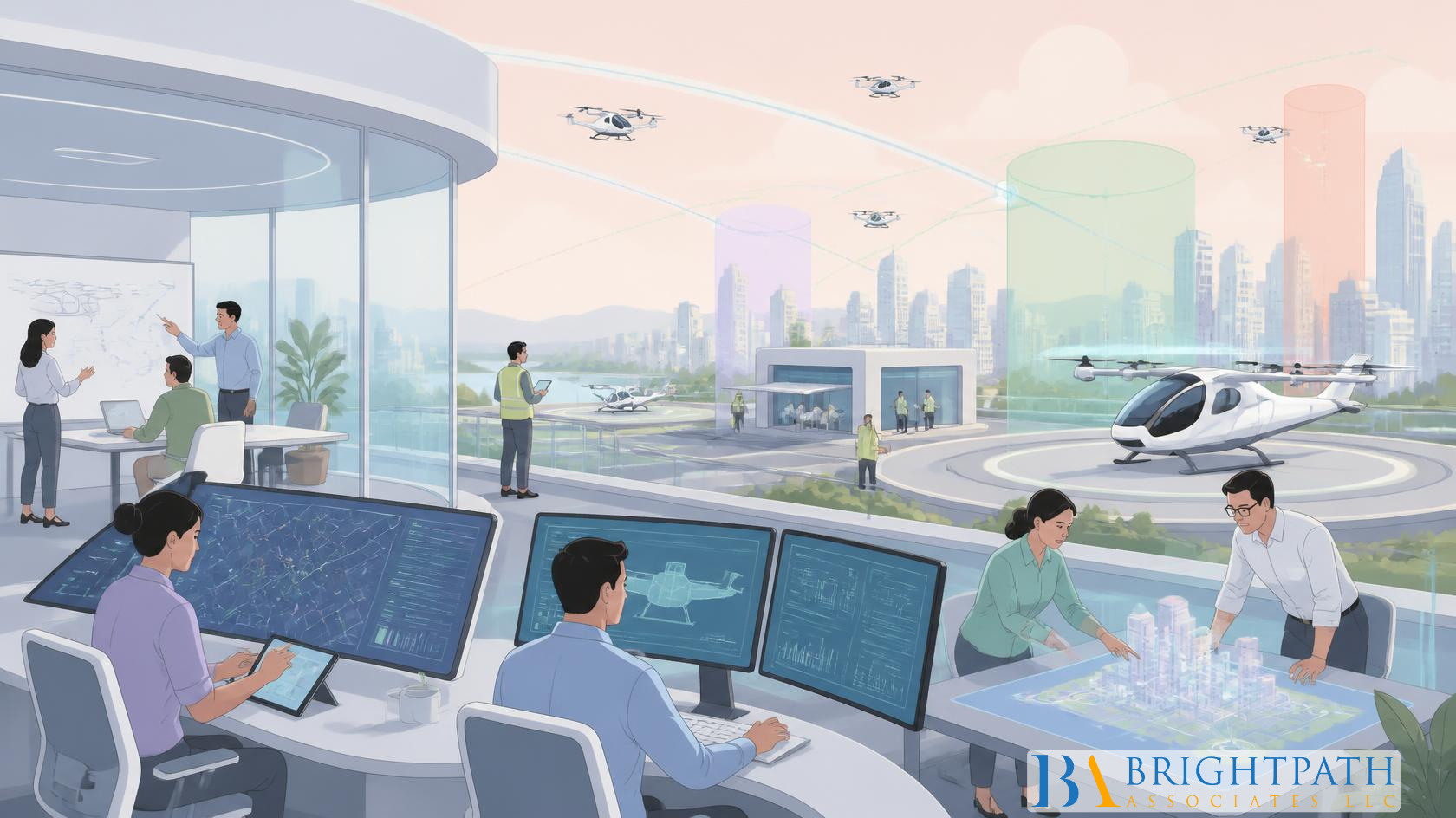
Electric vertical takeoff and landing (eVTOL) aircraft are creating new possibilities for urban transportation, regional connectivity, emergency response, and specialized logistics. By combining electric propulsion with vertical takeoff capabilities and advanced flight-control technologies, these aircraft could transform how people and goods move between cities and transportation hubs.
However, developing a capable aircraft is only one part of the equation. Successful deployment requires coordinated airspace management, dependable infrastructure, regulatory readiness, cybersecurity, manufacturing capacity, and experienced leadership. For small and mid-sized aerospace businesses, these interconnected requirements create both substantial opportunities and significant execution challenges.
In 2026, the central question is no longer simply whether eVTOL technology can work. It is how the industry can establish safe, scalable, and economically sustainable operations. Companies that address this challenge through integrated planning and strategic talent acquisition will be better positioned to compete in the evolving advanced air mobility market.
Airspace Coordination: Creating a Connected Aviation Ecosystem
As eVTOL operations expand, aircraft will need to share airspace with commercial airplanes, helicopters, drones, and other aviation users. This complexity becomes especially important in metropolitan areas where flight routes, landing locations, weather conditions, and conventional aviation activities must coexist.
Digital airspace management can help operators coordinate flight schedules, monitor aircraft positions, evaluate weather updates, and identify potential operational conflicts. Reliable information exchange between aircraft operators, vertiport managers, and air navigation service providers will be essential to maintaining predictable operations.
Interoperability is another important consideration. If manufacturers and service providers develop incompatible platforms, operators may encounter higher costs and unnecessary coordination difficulties. Common technical standards and clearly defined operating procedures can support more consistent integration across different locations.
Nevertheless, automation alone cannot guarantee safety. Digital coordination systems must undergo appropriate validation, maintain dependable communication pathways, and operate within approved aviation procedures. Companies should also establish contingency plans for communication failures, severe weather, and unexpected airspace restrictions.
Building the Digital Foundation for eVTOL Operations
The future of advanced air mobility depends on an interconnected digital environment linking aircraft, ground infrastructure, maintenance systems, and operational control centers. This environment must support accurate flight tracking, secure communications, route planning, and real-time operational monitoring.
Artificial intelligence and predictive analytics may improve traffic forecasting, aircraft utilization, and maintenance scheduling. Digital engineering tools can also help manufacturers evaluate system performance before committing resources to physical testing.
However, aviation organizations must assess these technologies against measurable performance and safety requirements. Predictive systems should be evaluated under unusual operating conditions, while safety-critical decisions must retain appropriate validation and human oversight.
Cybersecurity is equally important. Flight planning platforms, maintenance databases, charging networks, and vertiport management systems may introduce vulnerabilities if they are not designed and managed securely. A cyber incident affecting operational information could disrupt service and create broader safety concerns.
Companies should therefore integrate security into system design, supplier evaluation, software development, and operational planning. Strong access controls, continuous monitoring, vulnerability management, and tested incident-response procedures can help protect interconnected infrastructure.
Manufacturing Scale and Supply Chain Resilience
Moving from prototypes to commercial fleets introduces a new set of operational challenges. Manufacturers must establish repeatable production processes, consistent quality standards, reliable component sourcing, and dependable maintenance support.
Battery systems, electric motors, avionics, structural components, and flight-control technologies all contribute to aircraft performance. Disruption affecting a critical supplier can delay production, increase costs, and interfere with customer commitments.
Companies can reduce these risks through supplier qualification, production traceability, contingency planning, and stronger coordination between engineering and manufacturing teams. Digital manufacturing systems can help identify bottlenecks and connect design changes with production documentation.
Organizations across the broader Defense and Space Industry offer useful examples of disciplined systems engineering, supplier oversight, and quality management in complex technological environments. Although eVTOL manufacturers must meet their own civil aviation requirements, relevant lessons from advanced aerospace and defense manufacturing can inform production planning and operational resilience.
Commercial Viability: Connecting Innovation with Customer Demand
Even a technically advanced aircraft must demonstrate a credible business model. Development costs, certification timelines, infrastructure investment, insurance, maintenance, battery durability, and fleet utilization all influence commercial viability.
Executives and investors should evaluate potential services based on realistic assumptions about passenger demand, route economics, turnaround times, charging requirements, and operational availability. Strong prototype performance does not automatically translate into sustainable revenue.
Partnerships between aircraft manufacturers, infrastructure developers, technology providers, and transportation operators can help organizations coordinate investments and share relevant expertise. However, these partnerships require clear responsibilities, realistic milestones, and transparent expectations.
For a deeper examination of the technologies, coordination requirements, and leadership capabilities shaping this transition, explore BrightPath Associates' analysis of the 2026 blueprint for eVTOL airspace coordination and deployment.
Conclusion: Preparing for a Scalable Advanced Air Mobility Future
The future of eVTOL aviation will depend on how effectively companies connect aircraft development with airspace coordination, secure digital systems, regulatory compliance, infrastructure readiness, manufacturing discipline, and commercial planning.
For small and mid-sized aerospace businesses, success requires more than technological innovation. It demands a coordinated operating model supported by resilient supply chains, realistic investment decisions, and leaders capable of managing complex programs.
Strategic hiring will remain a major differentiator as the sector develops. Organizations that secure the right leadership talent can improve cross-functional collaboration, strengthen execution, and prepare their businesses for evolving market requirements.
