Global Supply Chains: Navigating Challenges and Opportunities
Author : Ellen Gomes | Published On : 14 May 2026
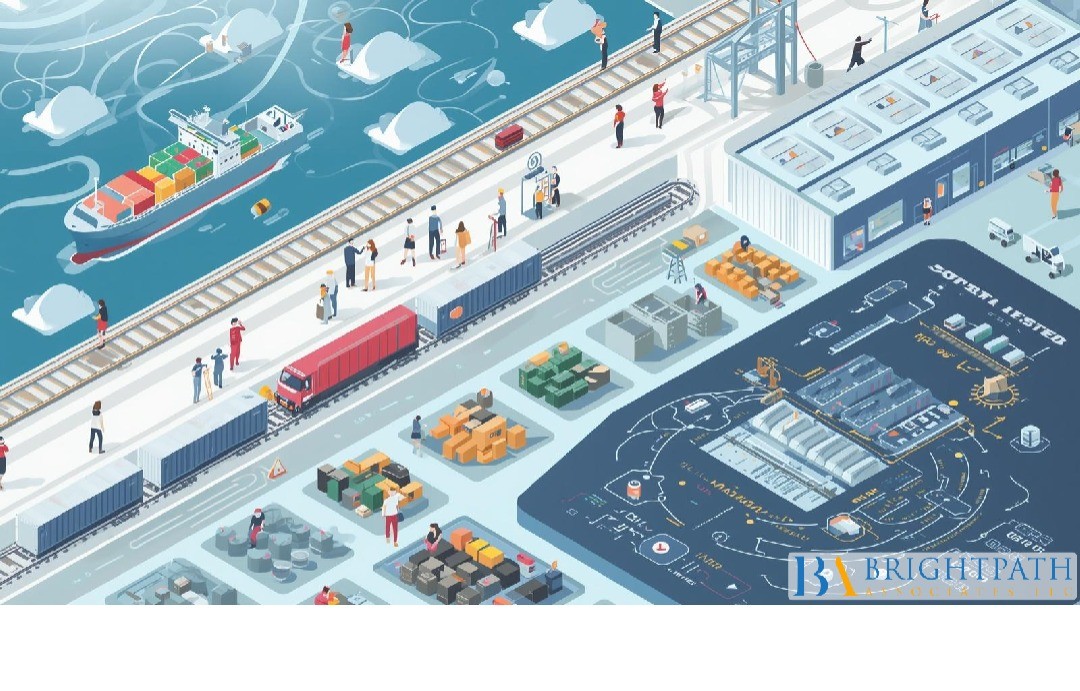
Global supply chains have become one of the most critical pillars of modern business operations, connecting manufacturers, suppliers, logistics providers, distributors, and consumers across international markets. However, over the past several years, supply chain networks have faced unprecedented disruption driven by geopolitical tensions, inflation, labor shortages, transportation bottlenecks, climate-related events, trade policy uncertainty, and rapidly shifting consumer expectations. These challenges have forced companies across the United States to rethink traditional supply chain models and prioritize resilience, flexibility, and digital transformation as essential components of long-term business growth.
For small to mid-sized businesses, particularly within the evolving Business Supplies & Equipment Industry, supply chain management is no longer simply an operational function. It has become a strategic business priority directly influencing profitability, customer satisfaction, workforce planning, and competitive positioning. Companies that can adapt quickly to supply chain disruptions while identifying emerging opportunities are positioning themselves for stronger long-term growth in an increasingly unpredictable global economy.
The global business environment has revealed just how interconnected and fragile supply chains can be. The COVID-19 pandemic exposed vulnerabilities in heavily centralized sourcing strategies, while geopolitical conflicts and trade disputes continue impacting global shipping routes, raw material access, and international production networks. Research examining global supply chain management highlights how geopolitical instability, natural disasters, and trade conflicts are creating major operational challenges for businesses worldwide while also accelerating the need for resilience-focused strategies.
Many organizations that once prioritized low-cost sourcing above all else are now shifting toward more diversified supply chain models. Businesses are increasingly adopting “China+1” sourcing strategies, regional manufacturing partnerships, reshoring initiatives, and multi-supplier procurement structures to reduce dependency on single-market production networks. Studies analyzing global supply chain restructuring show that companies are actively exploring diversification and resilience strategies as geopolitical and economic uncertainty continues reshaping international trade relationships.
Transportation and logistics disruptions remain another major concern for businesses operating within global supply networks. Port congestion, container shortages, rising freight costs, customs delays, and labor shortages continue affecting delivery timelines and operational predictability. Reports examining current global supply chain conditions note that disruptions linked to trade tensions, pandemics, labor shortages, and environmental concerns have significantly increased shipping delays and operational costs across industries.
At the same time, changing customer expectations are creating additional pressure on supply chain performance. E-commerce growth and accelerated delivery demands have pushed companies to improve forecasting, warehouse management, inventory visibility, and distribution efficiency. Consumers now expect faster fulfillment, real-time tracking, and consistent product availability regardless of broader market disruptions. Businesses unable to meet these expectations risk losing customer trust and market share in highly competitive industries.
Despite these challenges, global supply chain transformation is also creating significant opportunities for innovation and operational modernization. Digital technologies such as Artificial Intelligence (AI), automation, blockchain, Industrial Internet of Things (IIoT), predictive analytics, and cloud-based supply chain platforms are helping businesses improve visibility, reduce inefficiencies, and strengthen resilience. Research focused on global supply chain innovation identifies digitalization, automation, robotics, blockchain, and IoT systems among the most important technologies improving transparency, adaptability, and operational responsiveness.
AI-powered forecasting systems are helping businesses improve inventory planning and demand prediction while reducing overstocking and shortages. Predictive analytics tools can identify disruptions before they escalate into major operational issues, allowing companies to make proactive sourcing and logistics decisions. Blockchain technologies are also gaining attention for their ability to improve supply chain traceability, strengthen security, and enhance transparency across complex global supplier ecosystems. Studies exploring blockchain integration within supply chain operations suggest the technology can significantly improve chain-of-custody management, digital verification, and operational trust between global trading partners.
Automation is becoming equally important as companies seek greater operational efficiency and scalability. Smart warehouses, robotics-driven fulfillment systems, automated procurement platforms, and digitally connected logistics operations are helping businesses reduce manual inefficiencies while improving delivery speed and inventory accuracy. Organizations investing in digital transformation are increasingly achieving stronger cost control, faster decision-making, and more agile operations. Industry analysts report that businesses implementing advanced digital supply chain systems are experiencing measurable improvements in operational efficiency, cost reduction, and revenue performance.
Sustainability is also emerging as a defining force shaping the future of global supply chains. Environmental regulations, ESG expectations, and growing consumer awareness are pressuring companies to reduce carbon emissions, improve sourcing transparency, and adopt greener operational practices. Businesses are now evaluating suppliers not only on cost and performance but also on environmental responsibility, ethical labor practices, and long-term sustainability commitments. Research examining sustainable supply chain innovation emphasizes the growing importance of green technologies, decentralized sourcing models, and environmentally responsible operational strategies.
As discussed in Global Supply Chains Navigating Challenges, organizations that embrace resilience, technology adoption, and strategic workforce development are far more likely to thrive within the evolving global economy. Supply chain management is rapidly becoming a competitive differentiator rather than simply a cost-control function.
However, technology alone cannot solve every supply chain challenge. Workforce transformation is becoming one of the most important priorities for organizations seeking long-term operational resilience. Businesses increasingly require professionals with expertise in logistics management, procurement strategy, data analytics, automation systems, cybersecurity, compliance, international trade regulations, and digital supply chain operations. Yet many small to mid-sized companies continue facing difficulties attracting and retaining highly skilled leadership and operational talent capable of navigating increasingly complex global supply environments.
This growing talent gap is forcing organizations to rethink executive hiring, succession planning, and workforce development strategies. Companies that invest in strong leadership teams capable of managing digital transformation, operational risk, supplier relationships, and supply chain modernization will be significantly better positioned to navigate future disruptions and capitalize on emerging market opportunities.
The future of global supply chains will likely belong to organizations that prioritize agility, visibility, sustainability, and innovation while maintaining strong leadership and workforce capabilities. Businesses can no longer rely solely on traditional sourcing models or reactive operational strategies in an environment shaped by constant disruption and rapid technological evolution.
Global supply chains are no longer simply about moving products from one location to another. They now represent a complex ecosystem where technology, resilience, sustainability, workforce strategy, and operational intelligence intersect to shape long-term business success. As disruption continues redefining global commerce, one critical question remains for industry leaders: Is your organization building a supply chain designed only for efficiency—or one truly prepared for the future of global business?
