Boiler Bag Filters: An Effective Solution for Cleaner Industrial Emissions
Author : Tech Flow | Published On : 27 May 2026
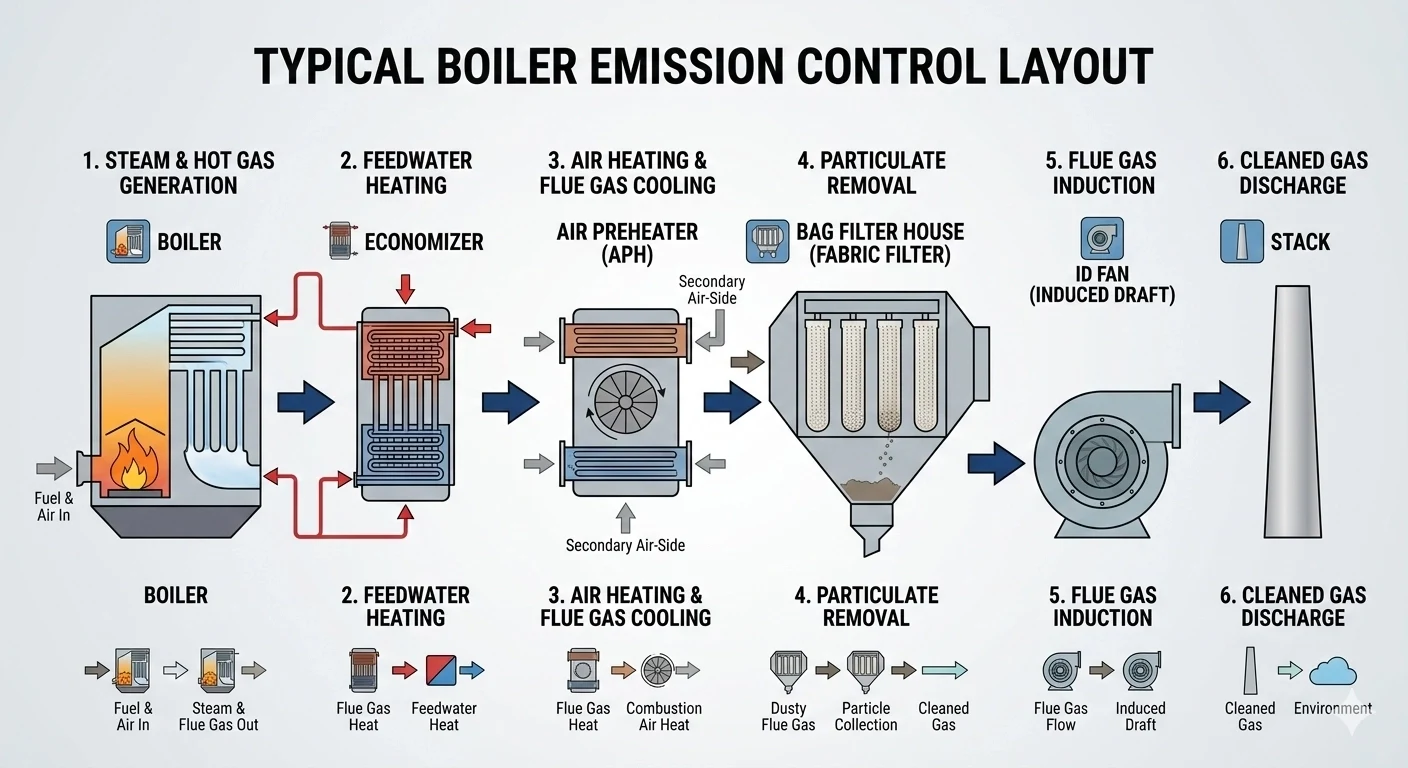
Boiler bag filters are widely used in industrial plants to control particulate emissions generated during boiler operations. These filtration systems are designed to remove dust, fly ash, soot, and other suspended particles from flue gases before they are released into the atmosphere. With increasing environmental awareness and stricter emission regulations, industries are adopting boiler bag filters to maintain cleaner operations and improve overall plant efficiency.
Industrial boilers play an important role in sectors such as cement, power generation, steel, chemicals, pharmaceuticals, food processing, textiles, and paper manufacturing. During combustion, these boilers produce flue gases containing harmful particulate matter that can impact air quality, damage equipment, and create environmental concerns if not properly filtered.
Understanding Industrial Boiler Emissions
Industrial boilers operate under high-temperature conditions and commonly use fuels such as coal, biomass, agro waste, pet coke, and mixed fuels. The combustion of these fuels generates varying levels of particulate matter and abrasive dust particles.
Typical pollutants found in boiler flue gases include:
- Fine dust particles
- Fly ash
- Soot and carbon particles
- Abrasive materials
- Acidic gases
- Moisture and condensable compounds
Modern boiler technologies such as AFBC and CFBC systems often experience fluctuating temperatures and changing dust loads, making emission control more challenging. This increases the need for reliable and efficient filtration systems.
What Are Boiler Bag Filters?
Boiler bag filters are fabric-based air pollution control systems designed to separate particulate matter from industrial flue gases. These systems consist of multiple filter bags manufactured from specialized filter media capable of withstanding high temperatures and harsh industrial environments.
The working process is based on filtration through fabric media. Dust-laden gas enters the filtration chamber and passes through the filter bags. Dust particles remain trapped on the outer surface of the bags while clean gas exits the system.
As dust accumulates on the filter surface, it forms a layer known as the dust cake. This layer improves filtration efficiency by capturing finer particles and maintaining cleaner emissions.
Because of their high collection efficiency, boiler bag filters are considered one of the most reliable solutions for industrial emission control.
Advantages of Boiler Bag Filters
Industries prefer boiler bag filters because they provide efficient particulate control while operating continuously under demanding conditions.
Major benefits include:
- High dust collection efficiency
- Reduced particulate emissions
- Improved environmental compliance
- Better workplace air quality
- Stable boiler performance
- Lower maintenance requirements
- Long operational life
- Improved plant reliability
These advantages help industries achieve cleaner operations and better environmental performance.
Important Design Factors for Better Performance
The efficiency and durability of boiler bag filters depend greatly on proper system design and operating conditions. Several important factors directly influence filtration performance.
Air-to-Cloth Ratio
The air-to-cloth ratio determines the filtration velocity within the system. If gas velocity becomes too high, it may result in:
- Increased pressure drop
- Frequent pulse cleaning cycles
- Excessive stress on filter bags
- Reduced filter bag life
Maintaining the correct air-to-cloth ratio helps improve filtration efficiency and operational stability.
Temperature Control
Temperature management is one of the most critical aspects of boiler bag filter operation. Each filter media type is designed to operate within a specific temperature range.
Excessively high temperatures may damage the filter material, while operating near the acid dew point can create condensation inside the system.
This may lead to:
- Corrosion
- Filter choking
- Reduced filtration efficiency
- Increased maintenance problems
Maintaining stable operating temperatures is essential for long-term system reliability.
Gas Flow Distribution
Uniform gas flow distribution across the filter chamber is necessary for balanced dust loading and efficient operation. Poor airflow design can create localized high-velocity zones that damage filter bags prematurely.
Proper gas flow management improves:
- Filtration stability
- Cleaning efficiency
- Pressure balance
- Equipment durability
Well-designed inlet systems help maintain consistent filter performance.
Pulse Jet Cleaning Systems
Most modern boiler bag filters use pulse jet cleaning systems to remove accumulated dust from the filter bags.
Compressed air pulses periodically clean the bags and restore airflow. However, cleaning intensity must be properly controlled.
- Excessive pulse pressure can damage the bags
- Insufficient cleaning increases pressure drop
Automated differential-pressure-based cleaning systems help optimize performance and extend filter life.
Integration with Boiler Draft Systems
Boiler bag filters typically operate under negative pressure conditions created by induced draft fans. The pressure drop across the filtration system directly influences airflow and combustion stability inside the boiler.
Proper coordination between the filtration system and draft system helps maintain:
- Stable combustion conditions
- Efficient airflow management
- Reduced energy consumption
- Reliable plant operation
A properly integrated system improves overall boiler efficiency and operational stability.
Importance of Filter Media Selection
Selecting the correct filter media is essential for achieving long-term filtration efficiency and durability. The choice depends on operating temperature, fuel type, dust characteristics, and emission requirements.
Aramid Filter Media
Aramid filter bags are commonly used in medium-temperature applications because they provide:
- Good thermal resistance
- Strong mechanical properties
- Reliable filtration performance
These media are suitable for biomass-fired and coal-fired boilers.
PTFE Membrane-Coated Media
PTFE membrane-coated filter media improve fine particle collection and prevent dust penetration into the fabric.
Their advantages include:
- Improved filtration efficiency
- Better dust release
- Stable pressure drop
- Enhanced emission control
These media are widely used in applications requiring strict emission standards.
Glass Fibre Filter Media
Glass fibre filter bags are ideal for high-temperature applications and offer:
- Excellent heat resistance
- Stable filtration performance
- Long service life
These media are available in woven, non-woven, and membrane-coated variants.
Pure PTFE Filter Media
Pure PTFE filter media provide excellent resistance to chemicals and acidic gases.
Key benefits include:
- High chemical resistance
- Superior thermal stability
- Easy dust release
- Longer operational life
These media are suitable for aggressive industrial environments.
Preventive Maintenance and Stable Operation
Routine maintenance and proper operating practices are essential for maintaining efficient bag filter performance.
Recommended preventive measures include:
- Maintaining stable gas temperatures
- Avoiding condensation conditions
- Using dry and clean compressed air
- Monitoring pressure drop regularly
- Maintaining proper pulse cleaning pressure
Regular maintenance helps reduce downtime and improve equipment life.
Environmental Benefits of Boiler Bag Filters
Boiler bag filters play an important role in reducing industrial air pollution by capturing harmful particulate matter before it enters the atmosphere.
Their use helps industries:
- Reduce particulate emissions
- Improve air quality
- Meet environmental regulations
- Maintain cleaner industrial operations
- Support sustainable manufacturing practices
As industries continue focusing on environmentally responsible production methods, advanced filtration systems are becoming increasingly important.
Conclusion
Boiler bag filters have become one of the most effective solutions for controlling particulate emissions in industrial boiler systems. Their ability to handle high dust loads, fluctuating temperatures, and continuous industrial operations makes them highly reliable for modern industrial applications.
However, achieving long-term performance depends on proper engineering design, filter media selection, airflow management, temperature control, and preventive maintenance practices. When properly designed and maintained, boiler bag filters help industries improve operational efficiency, reduce emissions, minimize downtime, and support sustainable industrial growth.
